
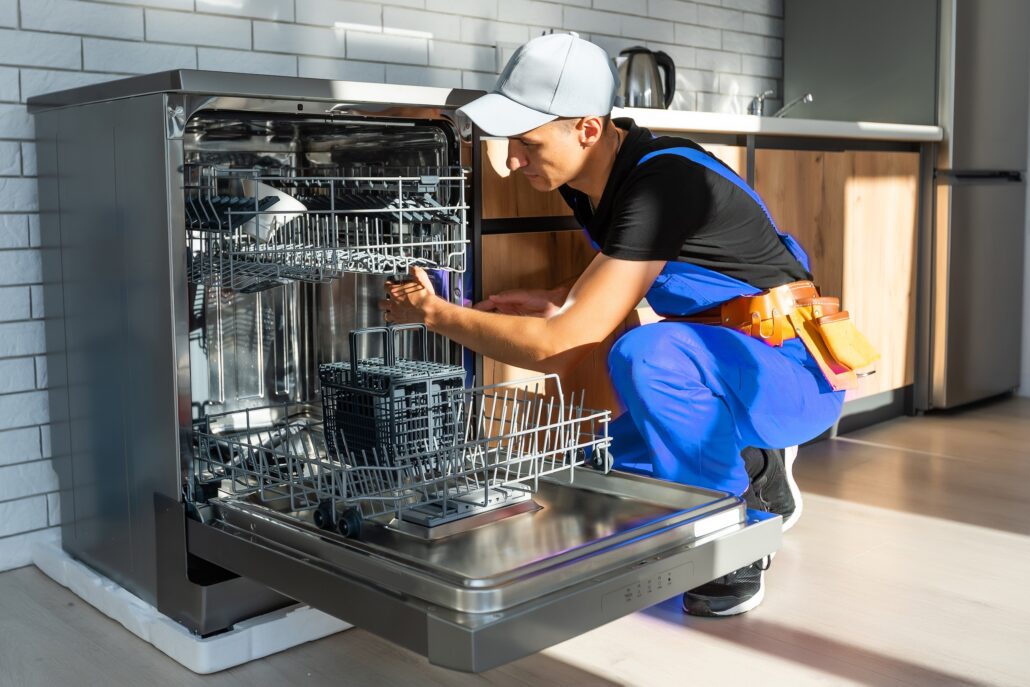
Clogged Dishwasher Help Before Dinner Becomes A Cleanup Project
Finding dirty water beneath the bottom rack can make an ordinary evening feel longer. A clogged dishwasher leaves you wondering about the dishes and the plumbing beneath your sink. Before restarting another cycle, a few careful checks can help explain where drainage went wrong.
Why A Clogged Dishwasher Holds Water
Your dishwasher needs an open drainage path to move wastewater out after washing. That path connects the appliance to your kitchen plumbing, sometimes through a garbage disposal. A blockage anywhere along that route can leave water inside the tub.
Food trapped around the filter is one possible cause of poor drainage. A blocked hose or restricted sink connection can create the same frustrating result. A drain pump problem can also leave standing water without any clog being present.
That distinction matters because repeated cleaning will not repair a failed pump inside the appliance. Understanding where drainage stops helps determine which professional should investigate the problem.
Stop The Cycle Before Investigating
Cancel the wash cycle before inspecting anything inside or underneath your dishwasher. Follow your owner’s manual for safely disconnecting power before removing accessible parts.
If water has reached nearby electrical connections, avoid the area until professional help arrives. Never reach into standing water while the appliance remains connected to power.
Place towels nearby before removing pooled water with a small container or sponge. Wear protective gloves because broken glass can hide beneath murky water inside the tub. Keep your hands away from openings where you cannot see what lies beneath.
If water continues entering after you cancel the cycle, stop troubleshooting and arrange professional assistance. Locate the appliance’s water shutoff valve if you can reach it safely.
Start With The Dishwasher Filter
The filter catches food particles before they travel farther through the appliance. Over time, trapped debris can restrict water movement around the bottom of the tub.
A clogged dishwasher sometimes improves after an accessible filter receives proper cleaning. Check your owner’s manual first because filter designs and removal methods vary between models.
Remove the lower rack if your manual directs you toward a removable filter. Rinse the filter according to manufacturer instructions, using a soft brush when permitted.
Avoid forcing a filter that does not release with the recommended motion. Some models use different assemblies that require another cleaning method or professional attention.
Reinstall every piece securely before restoring power and testing the appliance’s drain function. An improperly seated filter can allow debris into areas it should never reach.
Check The Kitchen Sink Connection
Your kitchen sink offers useful clues about trouble farther along the drainage route. Watch how water leaves the sink without running the dishwasher at the same time.
Slow sink drainage suggests a restriction that may affect both kitchen fixtures. If the sink backs up when the dishwasher drains, that shared connection deserves attention.
A clogged dishwasher can result from a problem beyond the appliance itself. Cleaning the filter will not remove an obstruction farther down the kitchen drain.
Avoid running another full cycle while wastewater collects inside the sink or dishwasher. Adding more water can turn a manageable blockage into a soggy cabinet cleanup.
When several household drains back up together, stop using affected fixtures and seek prompt plumbing help. That pattern can indicate a restriction beyond the kitchen’s immediate drain connection.
Look At The Air Gap
That small capped fitting beside your kitchen faucet may be a dishwasher air gap. It helps protect the dishwasher against wastewater backing up through a blocked drain connection.
Water spilling from this fitting during draining points toward an issue needing investigation. Debris inside the fitting or its outlet hose can interfere with proper drainage.
Follow your manufacturer’s instructions before removing the cover and cleaning accessible material inside. Never push debris deeper into the connected hose while attempting to clear it.
If cleaning the accessible fitting does not stop overflow, the connected plumbing needs further inspection. Manufacturer guidance identifies continuing air gap leakage as a reason to involve a plumber.
Protect the countertop while investigating, since overflowing water can find gaps around sink fittings. Water beneath the cabinet deserves attention before another wash cycle begins.
Consider The Garbage Disposal
A dishwasher connected to a garbage disposal depends on that connection remaining open. Food buildup inside the disposal’s drainage path can interfere with water leaving the dishwasher.
Before operating the disposal, confirm that no utensils or other foreign objects are present. Follow its operating instructions, and never place your hands inside the grinding chamber.
Recent installation work also provides an important clue when drainage suddenly stops. New disposals contain a dishwasher inlet plug that requires removal when connecting the appliance.
If that plug remains installed, wastewater cannot pass through the intended disposal connection. Have the installer or a qualified professional verify the connection before dismantling anything yourself.
A dishwasher that stopped draining immediately after disposal replacement deserves this specific check. Mentioning the timing during a service call helps narrow the investigation.
Inspect What You Can See
The visible drain hose beneath your sink may reveal an obvious restriction. Stored cleaning supplies can press against a hose and pinch its drainage path.
Move nearby items without pulling the hose or disturbing its plumbing connections. Look for visible damage, and note any moisture around the hose ends.
Do not pull a built-in dishwasher forward simply to inspect hidden hose sections. Moving it can strain electrical connections or damage the water supply line.
Hose routing also matters, so avoid lowering or rearranging an existing installation. Your appliance instructions and applicable plumbing requirements determine how that drainage connection belongs.
A loose clamp or cracked hose needs proper repair before the next cycle. A temporary patch can leave hidden leaks beneath cabinetry or nearby flooring.
Avoid Repairs That Create More Trouble
Pouring household drain cleaner into a clogged dishwasher can create additional hazards. Use only cleaning products and methods approved by the manufacturer for your appliance.
Boiling water is another shortcut worth skipping when you have not identified the blockage. It cannot correct a failed pump or fix an incorrectly installed disposal connection.
Repeatedly restarting the machine also leaves the underlying drainage issue unresolved inside the kitchen. One controlled test after an approved cleaning step offers more useful information.
If the appliance still holds water, stop repeating the same unsuccessful fix. Dinner cleanup should not become an evening of supervising increasingly questionable kitchen experiments.
Know Which Professional To Call
A plumbing problem and an appliance failure can produce similar dishwasher symptoms. The right service depends on where the water stops moving through the system.
At Palo Alto Plumbing, we help homeowners address kitchen drain concerns affecting connected fixtures. Our plumbing services provide a starting point when sink drainage or disposal connections need attention.
An internal pump failure generally requires an appliance repair professional familiar with your dishwasher. A clear sink drain does not rule out a problem inside the machine.
A clogged dishwasher that returns after cleaning deserves diagnosis instead of another temporary workaround. Explain what you checked and describe any changes following your attempted repair.
Homeowners can review our service areas while confirming coverage for plumbing help near their neighborhood.
Reduce Repeat Drainage Problems
Scrape larger food scraps into the trash before loading dishes into the machine. Follow the appliance manufacturer’s guidance on loading and filter cleaning for your model.
Inspect the filter more often if you notice food collecting around its opening. Keep disposal use within manufacturer recommendations so the shared drainage connection stays functional.
Avoid crowding the cabinet with supplies that press against visible plumbing connections. A little space under the sink makes emerging leaks easier to spot.
Our homeowner resources offer additional guidance for caring for household systems between professional service visits. Keeping track of recurring symptoms also helps when an inspection becomes necessary.
For separate heating and cooling projects, our Bryant HVAC information covers another area of home comfort.
FAQs
A shared drain restriction can affect both your dishwasher and kitchen sink. Sink backup during dishwasher draining suggests the connected drainage path needs inspection.
Some models retain a small amount of water within the recessed filter area. Water covering the tub floor after a completed cycle requires checking your manual.
The dishwasher connection may still contain the new disposal’s removable inlet plug. Ask the installer to verify that plug removal and hose installation were completed.
Do not use household drain cleaner unless your appliance manufacturer expressly approves it. Incompatible chemicals can create hazards and may damage components inside the dishwasher.
Avoid starting another wash cycle while the cause of standing water remains unknown. Follow your manual’s drain instructions after completing an approved inspection or cleaning step.
Standing water alone does not establish that your appliance needs complete replacement. A blocked connection may be repairable, while internal failures require an appliance assessment.
Get Your Kitchen Back On Track
We can help investigate kitchen drainage problems that keep interrupting your household routine. Contact Palo Alto Plumbing or call 650-374-0868 to discuss your plumbing concerns and arrange service.


